

















For the longest time, if you mentioned “Indian cycling” to a casual sports fan, they’d probably picture a commuter weaving through city traffic, not an elite athlete flying around a steeply banked wooden track at 70 km/h.
But things are changing and they are changing fast.
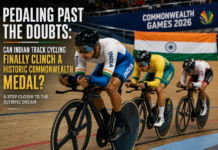
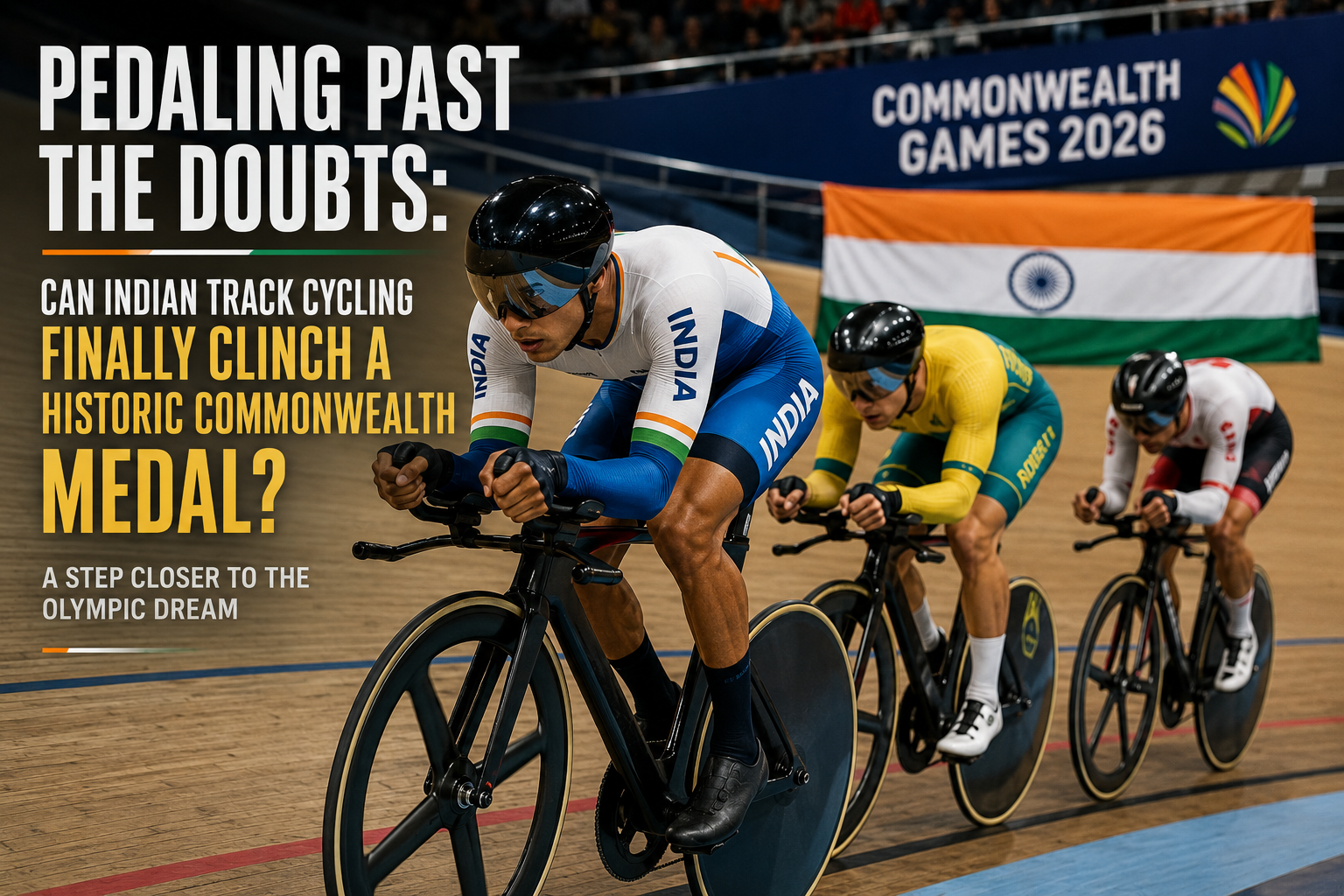
With the 2026 Commonwealth Games on the horizon, there is a quiet, electric buzz building in the Indian sporting community. Our track cyclists are standing on the edge of history, eyeing a milestone that once felt like a pipe dream: India’s first-ever Commonwealth Games medal on the velodrome.
But as exciting as a CWG medal would be, the real prize is even bigger. This isn’t just about one podium in 2026; it’s about building a launchpad to the ultimate dream of the Olympic Games.
The Raw Thrill of the Velodrome: Why Track Cycling Hits Different
If you’ve never watched track cycling, forget what you know about road racing. This isn’t a long, scenic Sunday ride. It’s chess on wheels at breakneck speeds.
Track cycling takes place in an indoor velodrome on fixed-gear bikes with no brakes. Yes, you read that correctly, no brakes. It’s pure adrenaline, a pressure cooker where riders need explosive power, tactical mind games, and split-second reflexes.
Events like the Sprint, Keirin, and Team Sprint are won and lost by milliseconds. It’s high-drama, high-risk, and incredibly spectator-friendly. For a country looking to expand its sporting identity beyond cricket, the raw adrenaline of track cycling is the perfect frontier.
The Commonwealth Games: A Brutal Litmus Test
Let’s be completely honest: the Commonwealth Games is not a “soft” tournament for track cycling. It is an absolute shark tank.
When Indian riders line up at the start, they are competing against some of the absolute powerhouses of the sport:
- Australia and New Zealand, who regularly dominate world championships.
- England and Scotland, backed by Great Britain’s legendary, multi-million-dollar cycling programs.
- Canada, always a fierce threat in sprint and endurance events.
Because the field is so stacked, winning a medal here isn’t just a physical victory; it’s a massive statement of intent. It proves to the world and to the sponsors and sports ministries back home that Indian cycling is ready for prime time.
The Steppingstone to the Olympic Rings
There is an open secret in elite sports: nobody just wakes up and wins an Olympic medal. The road to the Olympic podium is littered with years of hard-learned lessons, high-stakes failures and incremental steppingstones.
The Commonwealth Games are the dress rehearsal for the Olympics. This is why this stage is so important for our riders: “The pressure cooker is a different thing. A multi-sport village is a totally different environment than a standalone championship. Managing hype and anxiety is a skill.
Tactical Masterclasses
You only get better by racing the best. Racing wheel-to-wheel with Olympic champions teaches the Indian riders to read races at the highest level.
The Olympic Qualification Hunt
Elite performances at major games offer critical international ranking points needed just to get a ticket to the Olympics.
Overcoming the Mental Barrier
Standing on a podium next to an Australian or British rider does wonders for an athlete’s psyche. It turns “I hope I can compete” into “I know I can win.”
The Quiet Revolution Inside India’s Velodromes
How did India get to a point where we are even talking about Commonwealth medals? It didn’t happen by accident.
Over the last decade, a quiet revolution has been taking place behind the scenes. Ten years ago, state-of-the-art velodromes, sports science support, and foreign coaches were distant dreams. Today, India’s top riders are:
- Training in world-class facilities and getting regular stints in Europe.
- Competing consistently in the Asian Championships and Nations Cups.
- Backed by youth development systems that identify raw talent early and nurture it with proper sports science.
We aren’t at the level of the Dutch or the British track programs yet, but the gap is shrinking every single year.
What a Breakthrough Medal Would Actually Mean
Remember what Abhinav Bindra’s gold did for Indian shooting, or what Neeraj Chopra did for track and field? They shattered a collective mental barrier. They made younger generations realize, “Wait, we can actually win at this.”
A single medal at the Commonwealth Games could trigger that exact same “domino effect” for Indian cycling:
“One breakthrough performance doesn’t just reward the athlete; it validates the entire system and inspires the next generation to dream bigger.”
It would force sponsors to take notice, encourage schools to invest in cycling programs, and most importantly, give young kids across the country the confidence to swap their street bikes for tracking bikes.
The Reality Check: Challenges We Can’t Ignore
While optimism is real, we have to keep our feet on the pedals. Indian cycling still faces uphill battles.
The world’s top cycling nations have decades of head start, larger pools of talent and huge engineering budgets dedicated to bike aerodynamics. To sustain this rise we need more domestic racing tracks, deeper scouting at the grassroots level in rural India, continued funding that doesn’t dry up after one major event for India. The game is consistency.
Final Lap
Whether our riders make the podium in 2026 or fall short by a fraction of a second, one thing is for sure: Indian track cycling is no longer about showing up to make up the numbers.
Here we compete. The road from the local velodrome to the Olympic podium is a long one, but Indian cycling is finally on the right course. Eyes on the track. The next chapter of Indian sporting history is being written at breakneck speed.