










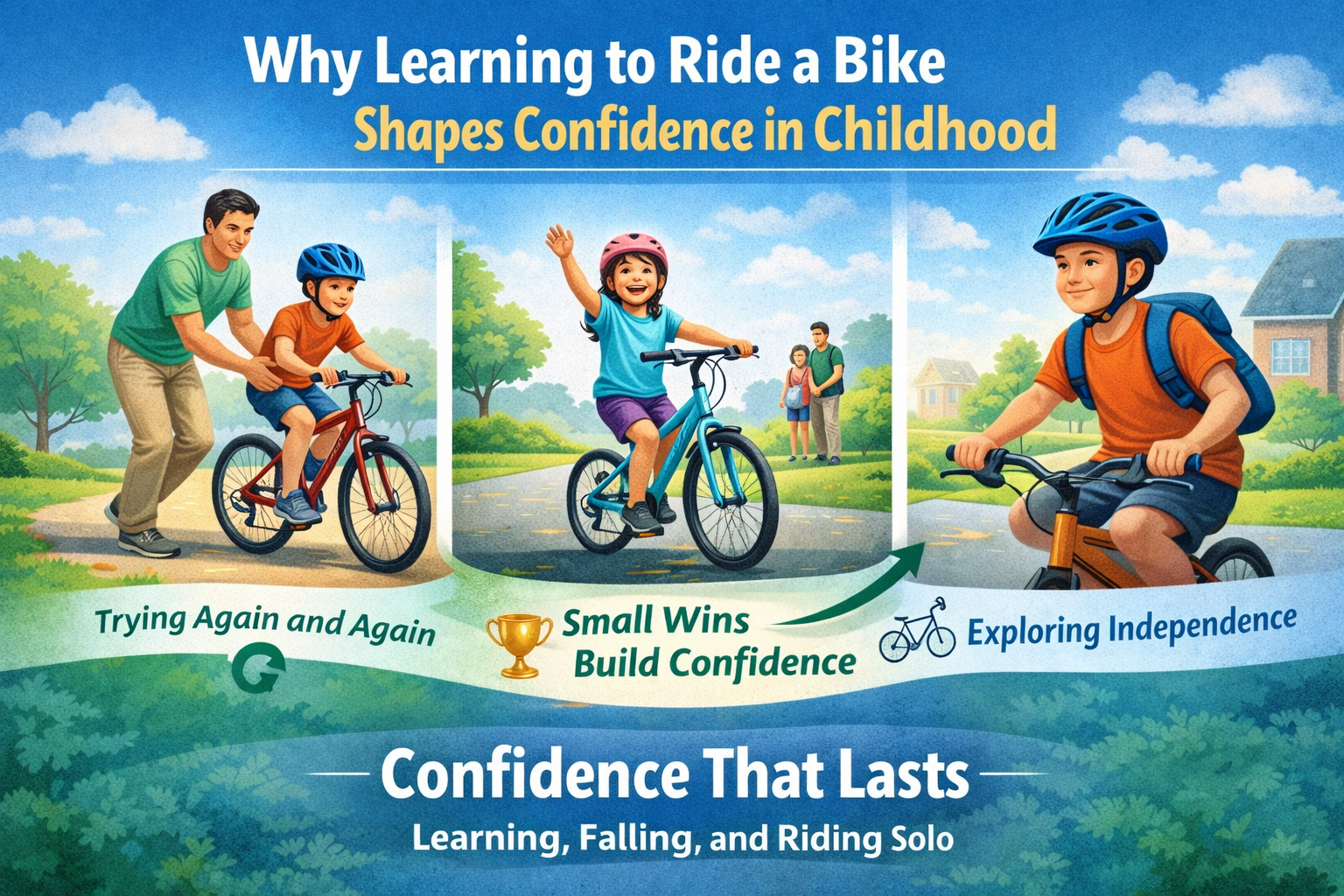
Most children remember learning to ride a bicycle, even years later. Not because it was perfect, but because it wasn’t. The first few tries are awkward. Feet keep touching the ground. Hands hold the handlebars too tight. There’s excitement but also fear. Someone is always close by, ready to help.
Then one day, the help fades. The child rides a short distance alone. Maybe they laugh. Maybe they shout for someone to look. That short ride feels big to them. It’s the first time they realise they can do something difficult by themselves.
That moment stays.
Learning to ride a bike helps children understand themselves better. They learn that progress takes time. They learn that falling doesn’t mean stopping. And when they ride on their own for the first time, they start trusting their own abilities. A bike slowly becomes more than a toy it becomes a step toward independence. This is how cycling supports a child’s growth in simple but meaningful ways.
How Cycling Helps Children Grow Confidence Builds Little by Little
No child starts riding with confidence. It grows slowly. A few seconds of balance. A slightly longer ride than yesterday. These small wins ever show children what they can do when they keep trying their best. That feeling doesn’t stay limited to cycling. It shows up in school, in friendships, and in how they face new challenges.
Discovering Independence
A bicycle often gives children their first real sense of freedom. They can move on their own, explore nearby places, and feel responsible for themselves. Deciding where to ride, when to slow down, or when to stop makes them feel capable. Being trusted like this helps confidence grow naturally.
A Feeling That Goes Beyond the Bike
After a fall, many children pause. They think. Then they try again. No one explains anything. They simply realise they can continue. Later, when they ride freely choosing their own turns and direction that confidence follows them off the bike too.
In the end, learning to ride isn’t about cycling. It’s about trying, failing, and trusting yourself enough to keep going. The bike may be forgotten with time, but the confidence it builds stays.