Google Maps is slowly turning into more than just a directions app. The company has now expanded Gemini’s conversational features to walking and cycling routes, letting users get help without needing to tap their phone. While moving, people can ask questions, check their ETA, look up nearby places, or handle quick tasks, all through voice commands. Until now, this experience was mostly limited to driving and two-wheeler navigation. The feature first appeared in November and is now being extended to cover more ways people travel every day.
What Changes with Gemini in Maps
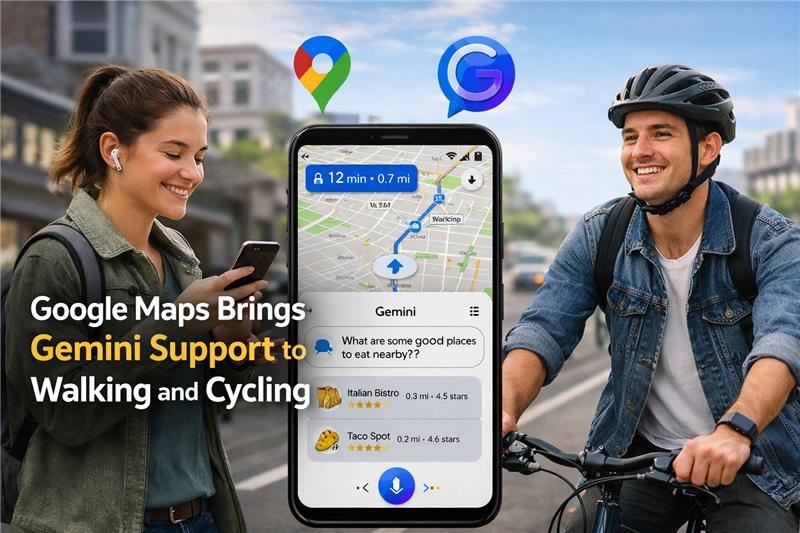
Gemini is available globally on Google Maps for both Android and iOS. Unlike regular search, it works only through voice, so users need to speak their requests. While walking, you can ask where you are or look for well-rated places nearby, and Maps will highlight those locations on the screen. Cyclists can check how long the ride will take or get updates about their route. Gemini can also pull in information from other Google services, which makes it useful beyond just navigation.Using Gemini While Walking or Riding
Getting started is simple. Open Google Maps, enter a destination, and begin navigation like you normally would. Once navigation begins, Gemini stays quietly active in the background. You can ask follow-up questions, look for places along your route, check for EV charging stations, or share your arrival time, all without pausing your walk or ride. You don’t have to tap your phone or pause your walk or ride. Just speak, and Gemini responds while you keep moving.
A More Natural Way to Get Around
With Gemini, Google Maps feels less like an app and more like a quick conversation. You can ask about parking nearby, places to eat, fuel stops, or charging points the same way you’d ask a friend, without following stiff or fixed commands. In some areas, Google has also started using landmarks to guide users, pointing out familiar places rather than relying only on distances, which makes directions easier to follow in real-world settings. For walkers and cyclists, this makes navigation feel more natural and easier to follow, especially in unfamiliar areas.